Let's Get Talking
A Conversational Card Game to Engage Men in Infertility Dialogue
2026
A Growing Crisis in Silence
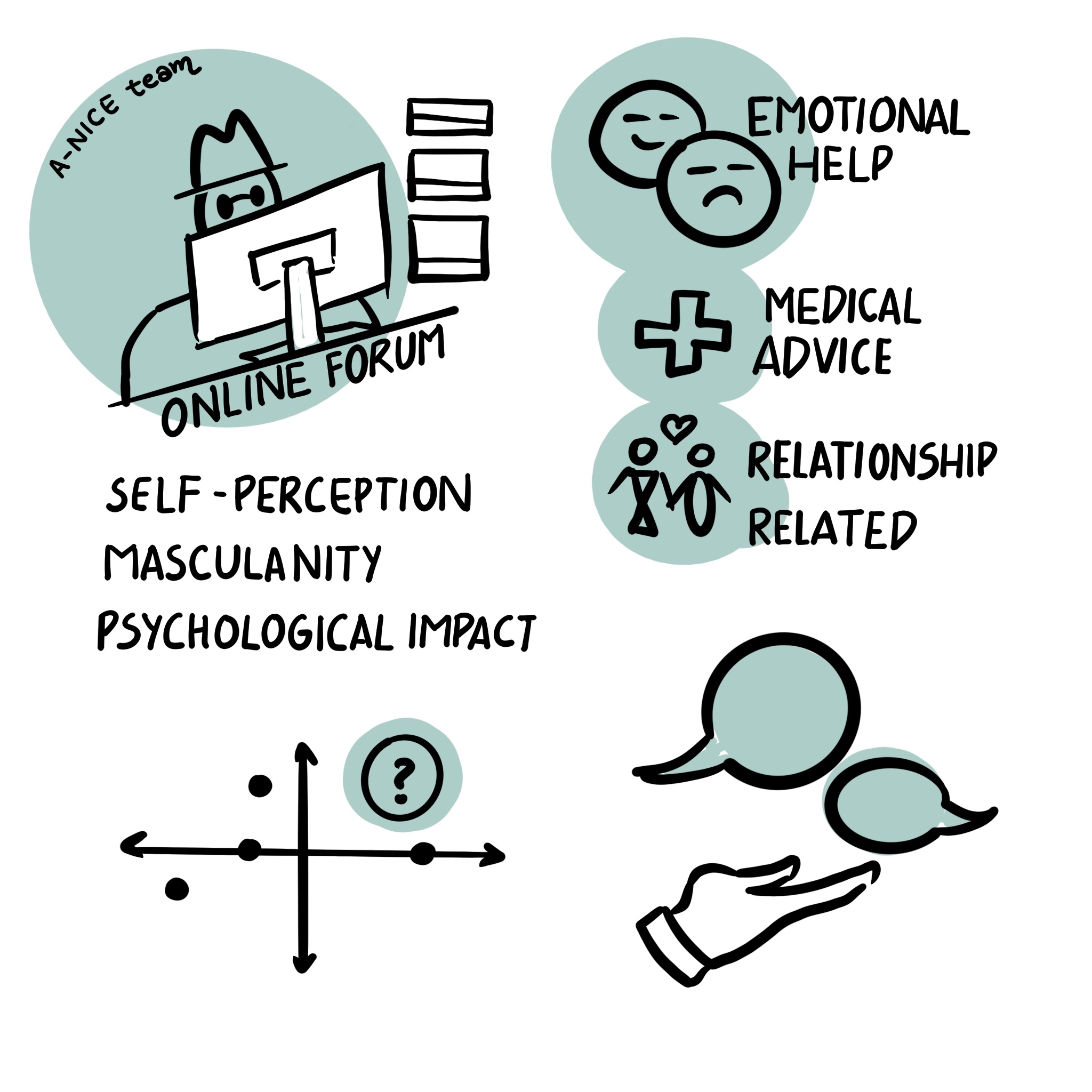
Male infertility affects approximately 50% of all infertility cases globally, yet men rarely talk about it. They internalize the shame, avoid seeking support, and suffer in silence, experiencing profound anxiety, inadequacy, and isolation. Existing solutions fall short: anonymous forums deprioritize emotional support, and clinical settings lack the human connection people desperately need.
The Core Insight
What if we removed the pressure? A game creates psychological distance, a safe buffer where men can discuss vulnerable topics without the weight of direct confrontation. Combined with guided prompts and physical presence, this becomes a powerful tool for connection.
The Solution
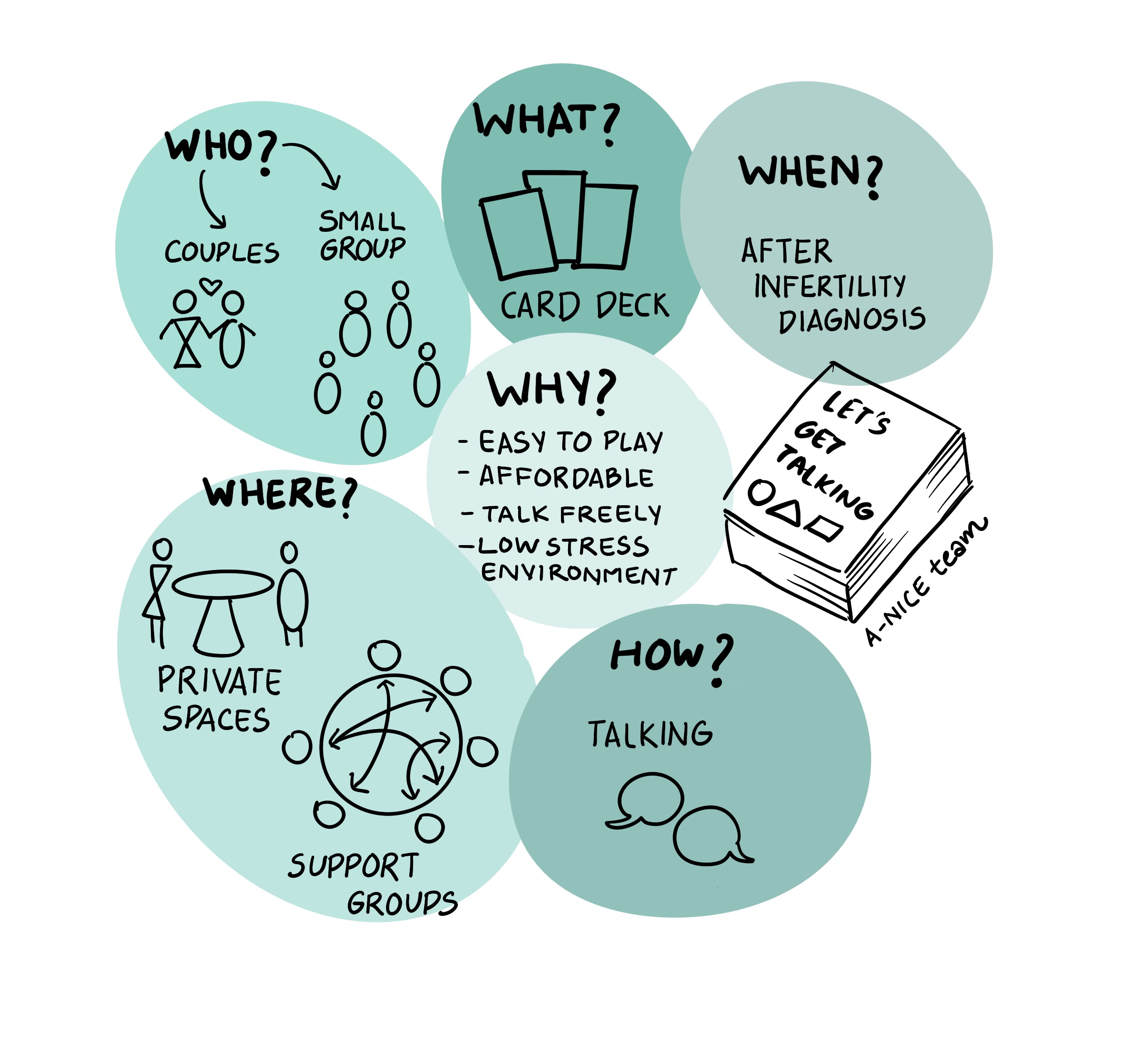
A physical, turn-based conversational card game designed for couples or support groups. Players draw cards, respond to thoughtful prompts, and gradually deepen their dialogue through three emotional levels. The game prioritizes participant agency and safety through skip cards that allow opting out without shame while the structure ensures everyone gets equal speaking time.
Intentional Design Choices
Color Psychology
Blue and teal palette chosen to evoke calm. Tested with male peers to ensure the emotional response was right.
Circular Forms
Sharp angles discourage vulnerability. Soft, rounded shapes make people feel safe enough to open up.
Three Levels
Progressive emotional depth: ice-breakers → personal reflection → intimate dialogue. Players control the pace.
Research & Iteration
Literature Review
Examined support models, psychological distancing principles, and game design frameworks
Market Analysis
Evaluated existing conversational card games and identified a critical content gap
User Testing
Played Where Should We Begin? and We're Not Really Strangers to understand mechanics and emotional responses
Design Iteration
Applied the Double Diamond framework to structure discovery, definition, development, and delivery
Validation
Tested visual design options with male peers; refined based on emotional response feedback
How AI Supported Development
AI helped us brainstorm prompt structures, test tonal variations, and refine the language so the game could invite vulnerability without sounding clinical or scripted. It improved the speed of writing and iteration while the final design decisions stayed firmly human-centered.
That made it easier to compare alternatives quickly and land on clearer, more careful prompts that support openness, emotional safety, and equal speaking time.
How It Works
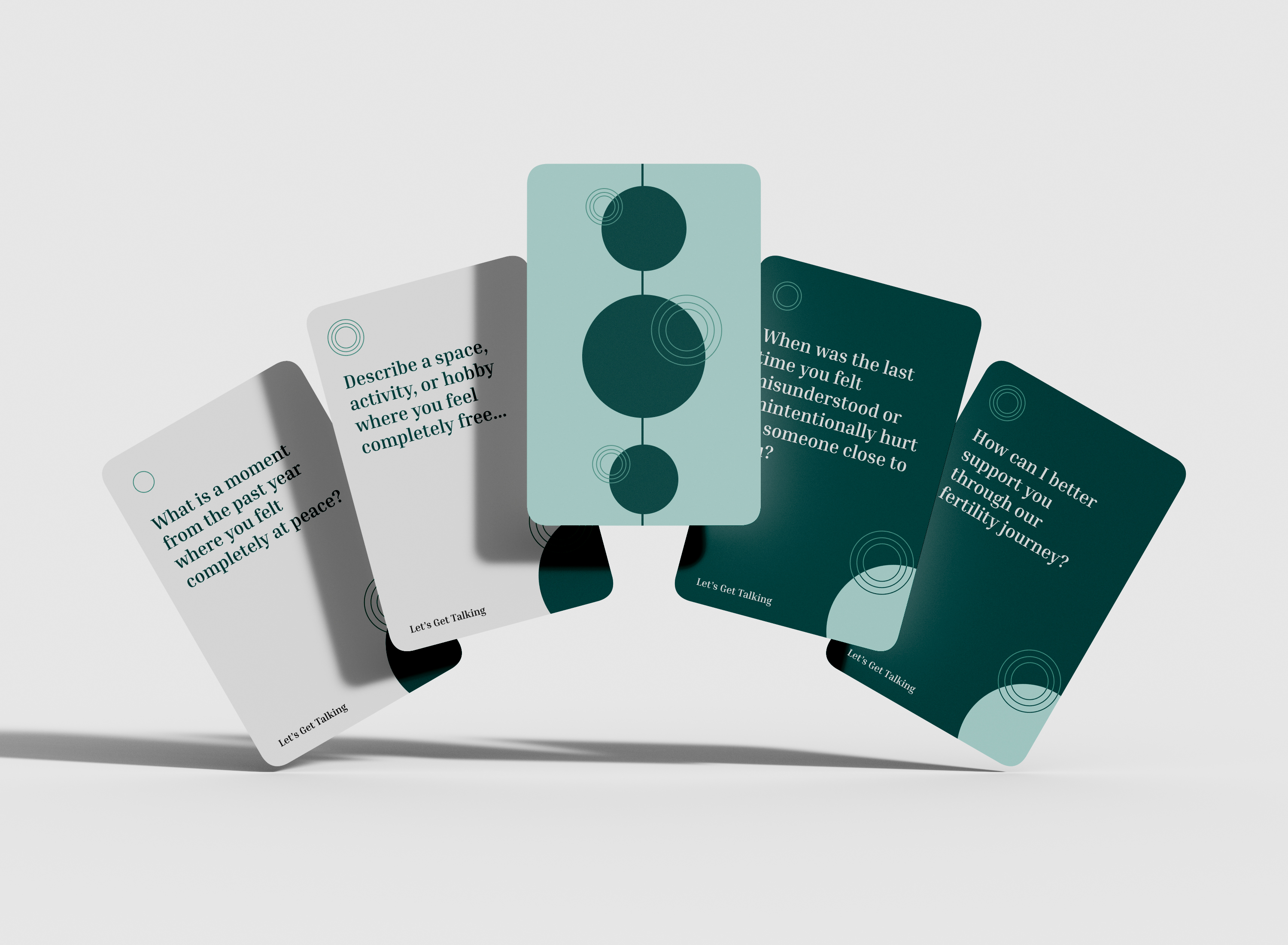
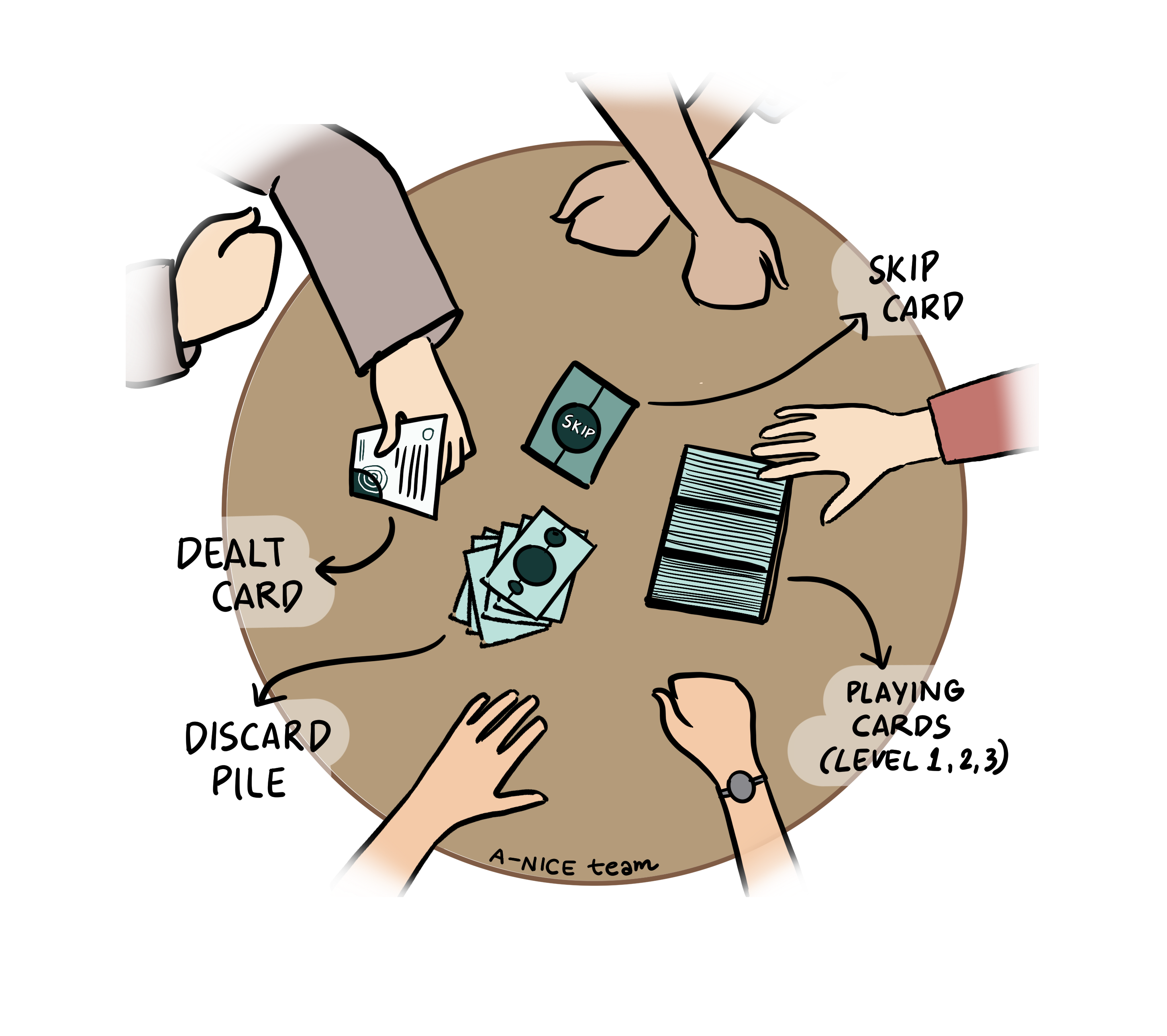
Two card types: General cards (light background) for group play with friends or support groups, and Couple-specific cards (dark background) for intimate conversations with partners that are easily removed for group settings. Players sit in a circle, draw cards, and respond to prompts at their comfort level with play continuing clockwise so everyone gets equal speaking time. Skip cards (3 per game) allow passing without pressure while you progress together through three emotional levels.
Impact
Men experiencing infertility, their partners, and support networks got a safer starting point for conversation and support.
The Team
Isha Chury
UC Santa Cruz
Eesha Gupta
UC Santa Cruz
Cynthia Le
UC Santa Cruz
Nuti Mody
UC Santa Cruz
Andrew Petersen
UC Santa Cruz