PureFind
Eating healthy on a budget means checking three apps for every item
UX Researcher & UI DesignerHealth independent study, soloJan 2026 – Mar 2026
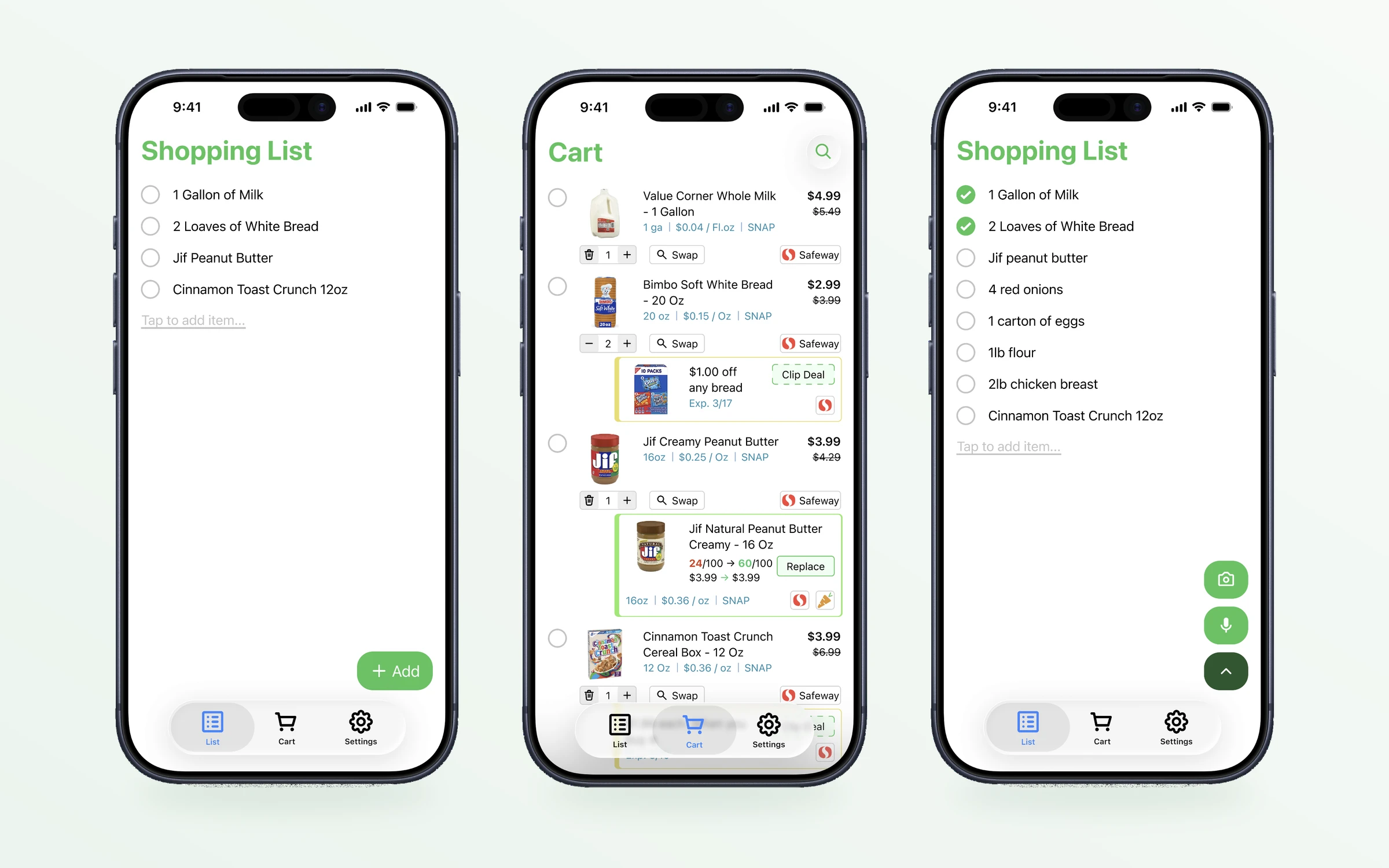
Most people in the survey could not afford balanced meals, and finding a healthier option meant looking up every item by hand. I analyzed the data on my own and designed PureFind, a shopping list that finds the best price and suggests a healthier swap within your budget.
- 75%
- couldn't afford balanced meals in the last two months
- 58%
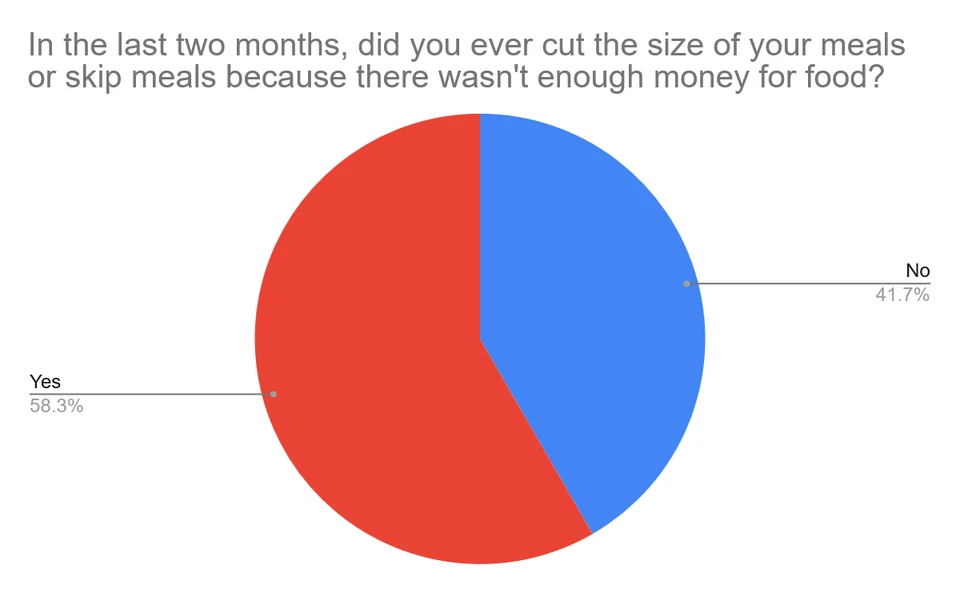
- cut or skipped meals because of money
- 4.5 vs 3.1
- how much price matters, vs health, out of 5
The problem
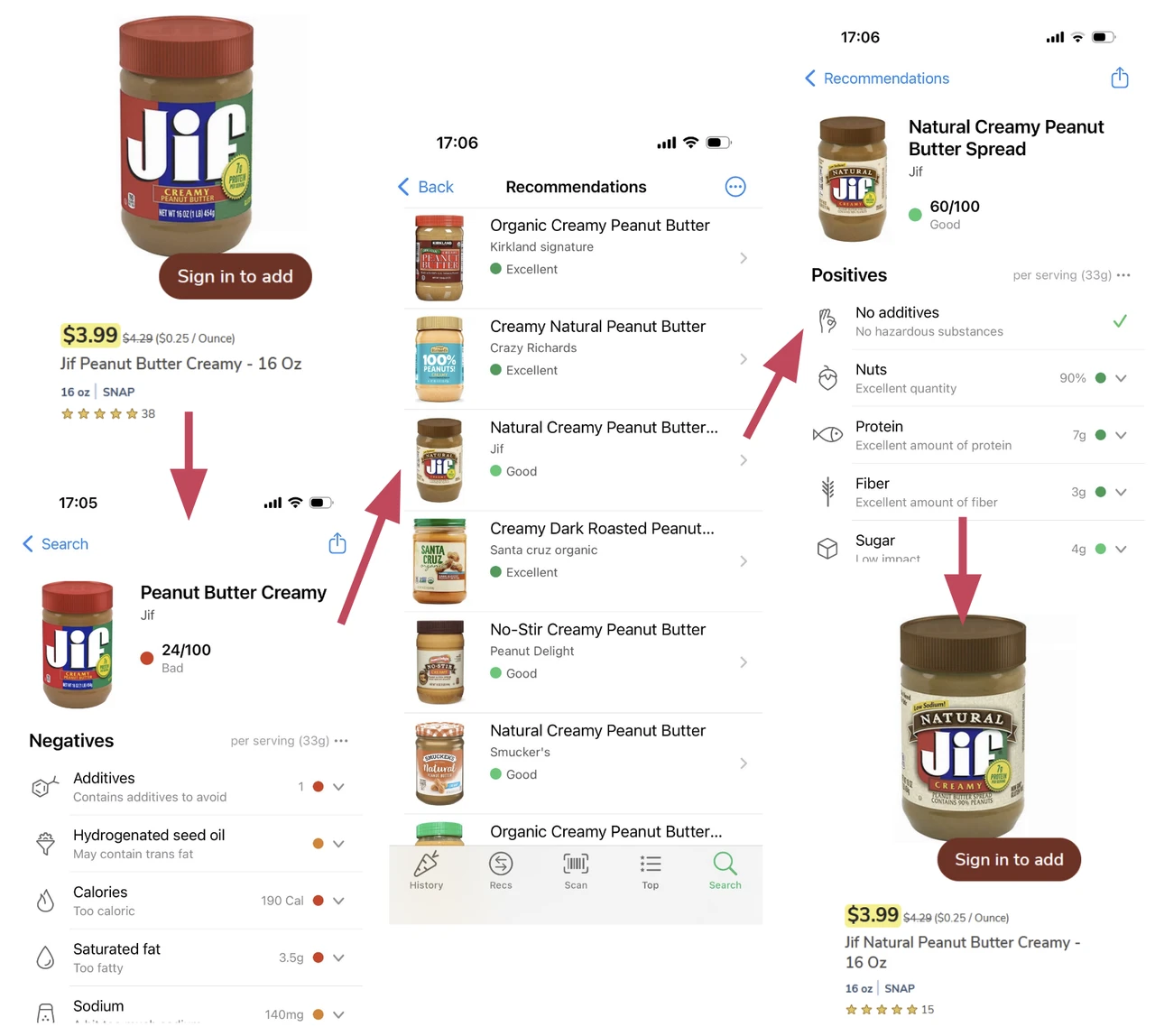
Price comes first, so health gets left behind. Finding a healthier option takes four steps across three apps: make a list, check each store, look the item up in Yuka, then check prices on its picks.
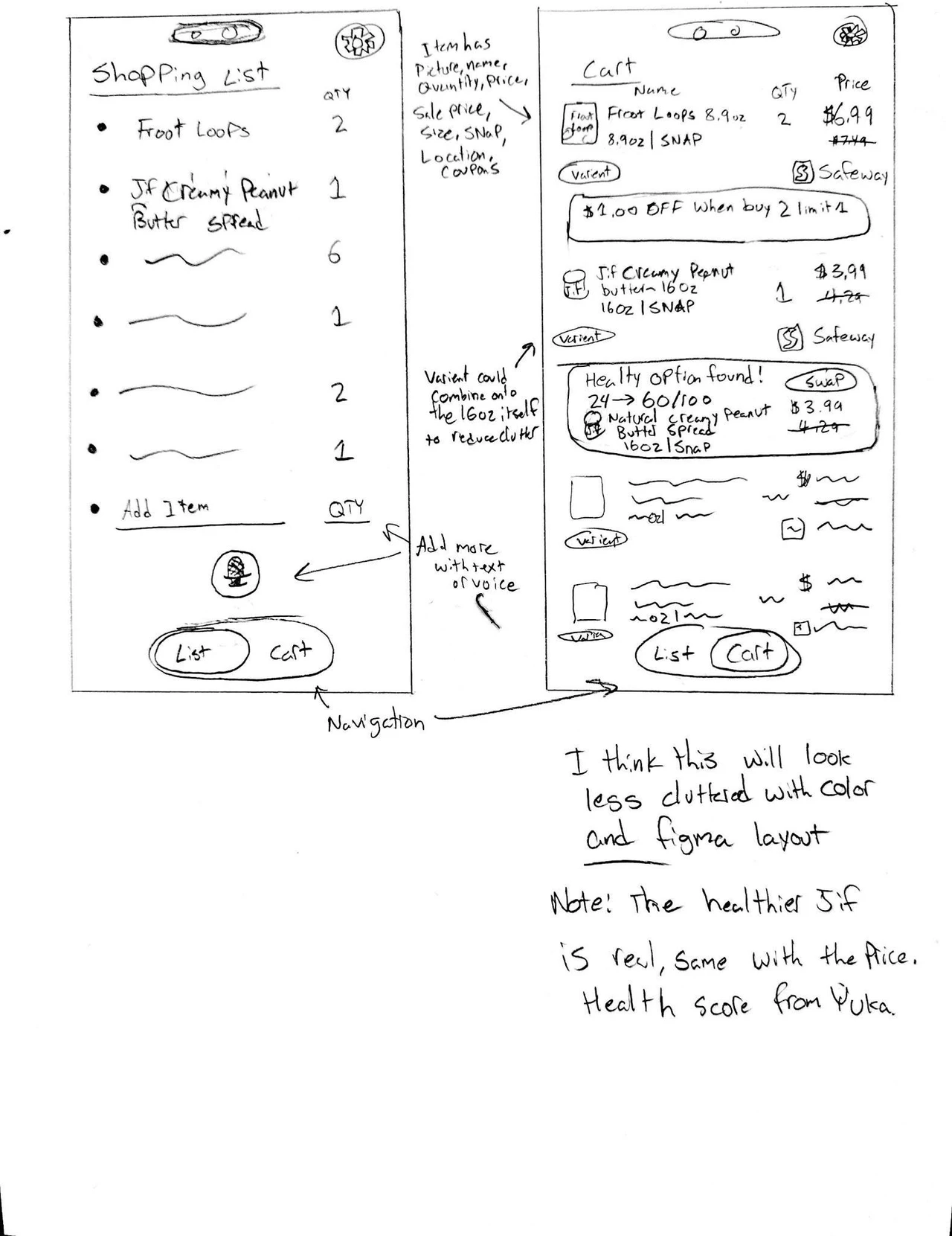
I tried it with Jif. Yuka scored it 24/100 and gave me more options than I could check. Some weren't at Safeway and some cost far more, but Jif Natural scored 60 at the same $3.99.
Buy foods like beans that are high in fiber so they make me feel full longer. They are healthy, reasonably priced, can make big meals that last a long time.
What I made
Write your list once. PureFind does the lookups: the best price at the stores you pick, the coupons to clip, and a healthier swap that stays in your price range.
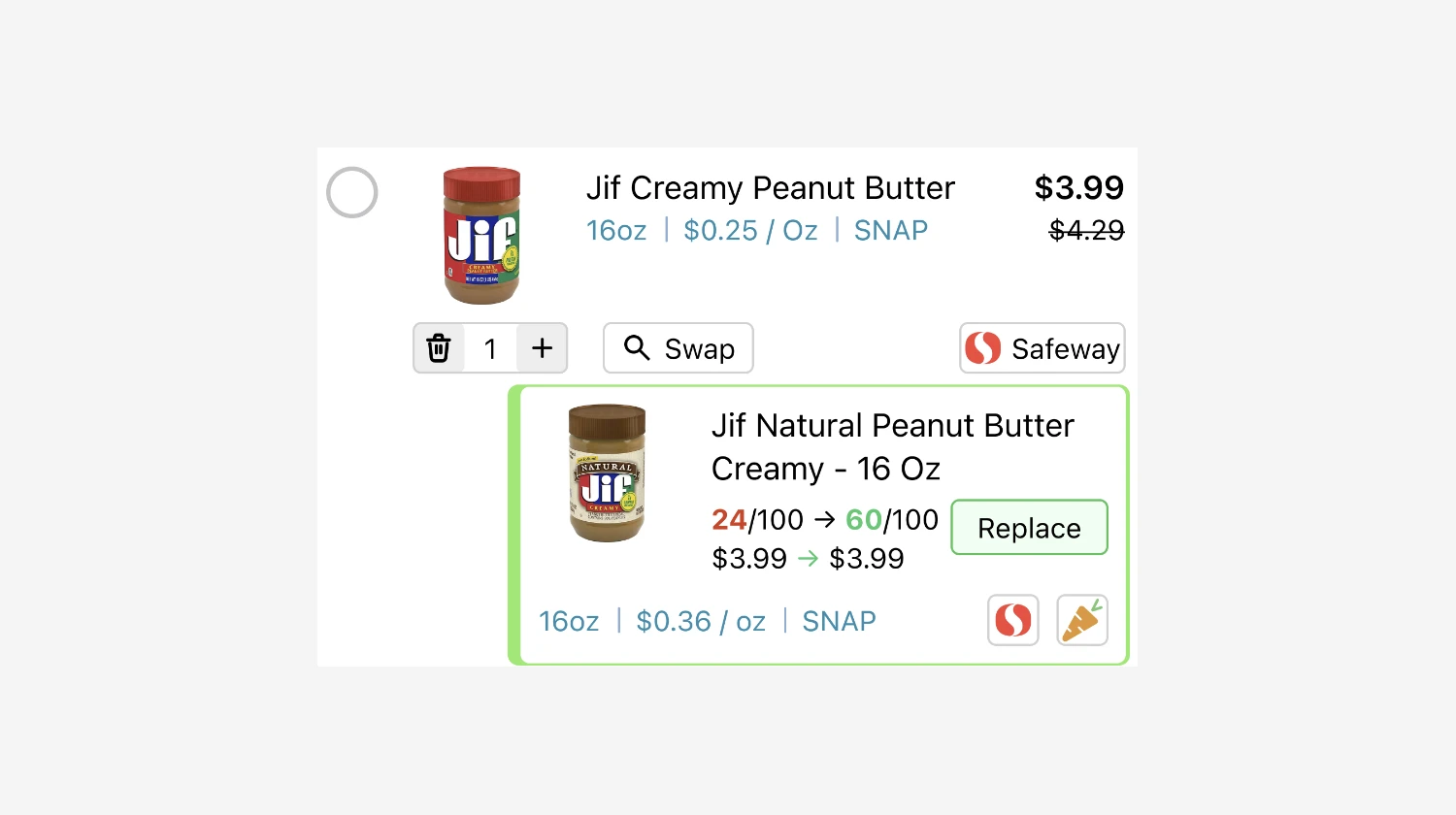
- 01
Best price
Across the stores you choose, with SNAP marked.
- 02
Coupons
Deals for each item, ready to clip in the store app.
- 03
Healthier swap
Only within a price range you set, one tap to replace.
- 04
No account
Nothing to sign up for, and privacy comes first.
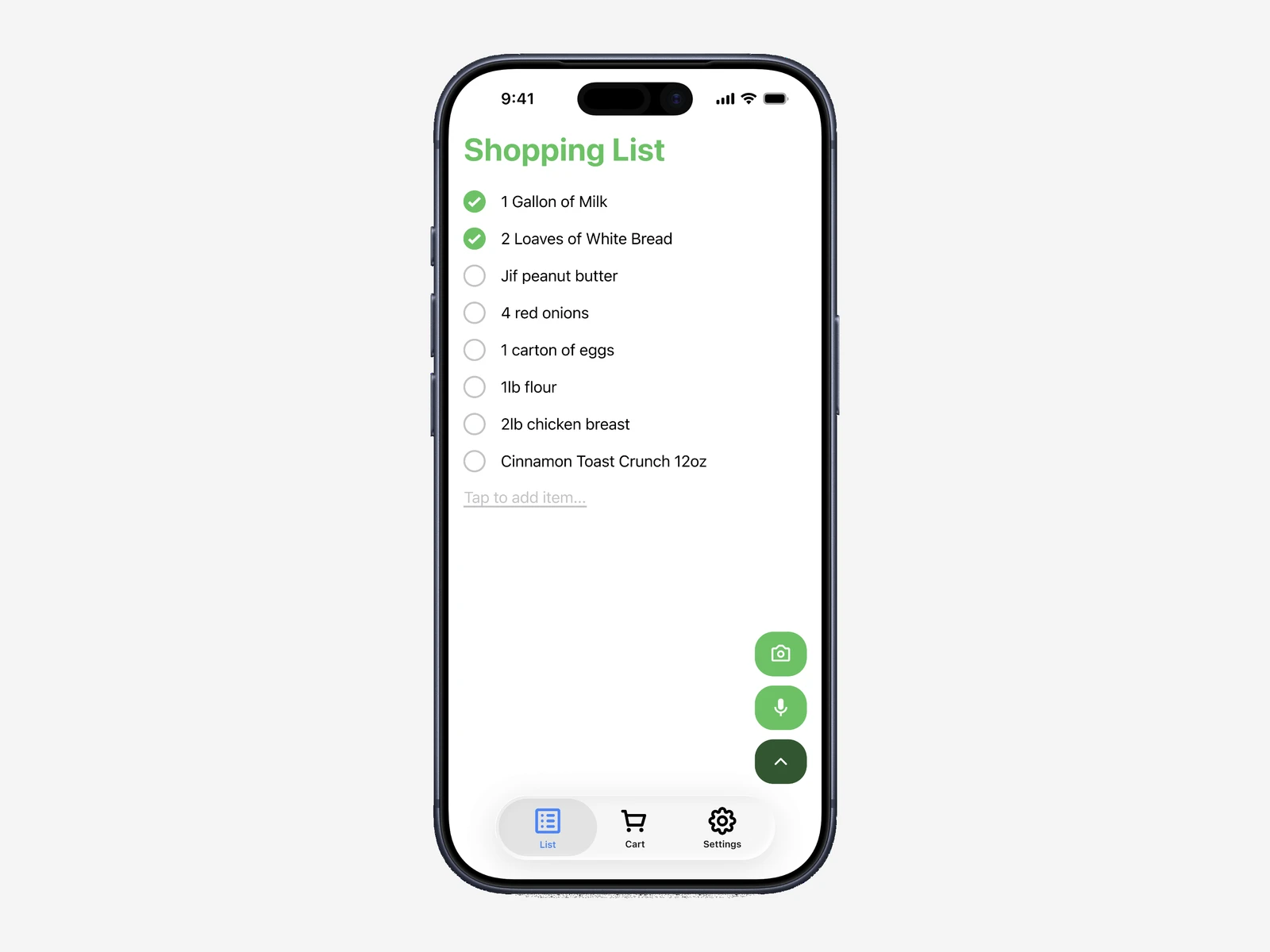
Shopping list
Type it, say it, or snap a photo. "1 gallon of milk" becomes one gallon jug.
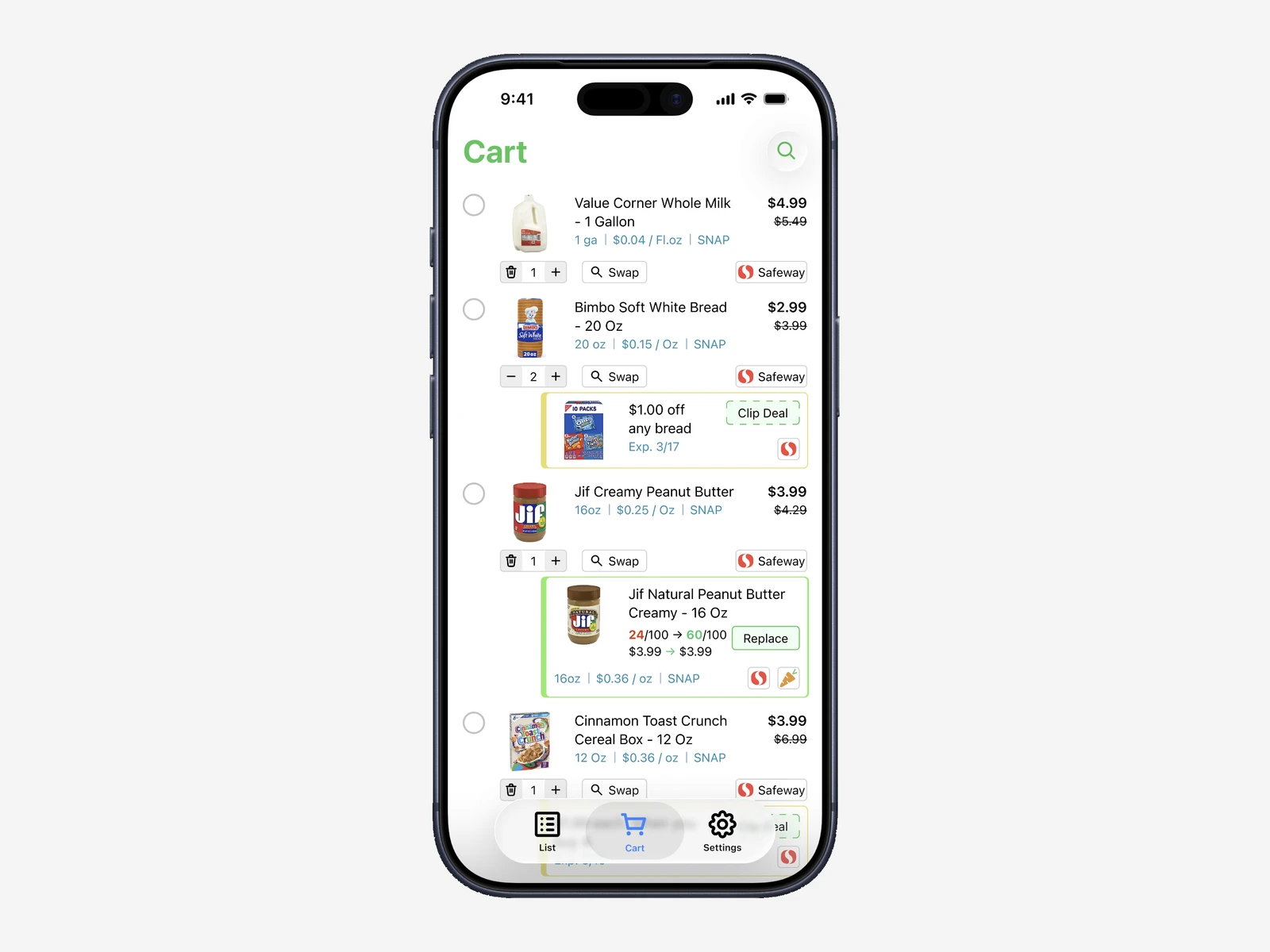
Cart
Your list, priced and matched, with sizes you can change later.
How I did it
Methods
- Literature review
- Survey analysis
- Affinity mapping
- Thematic analysis
- Competitive analysis
- Paper sketching
Tools
- Google Sheets
- Miro
- Figma
- Gemini
- NotebookLM
Reading 159 responses
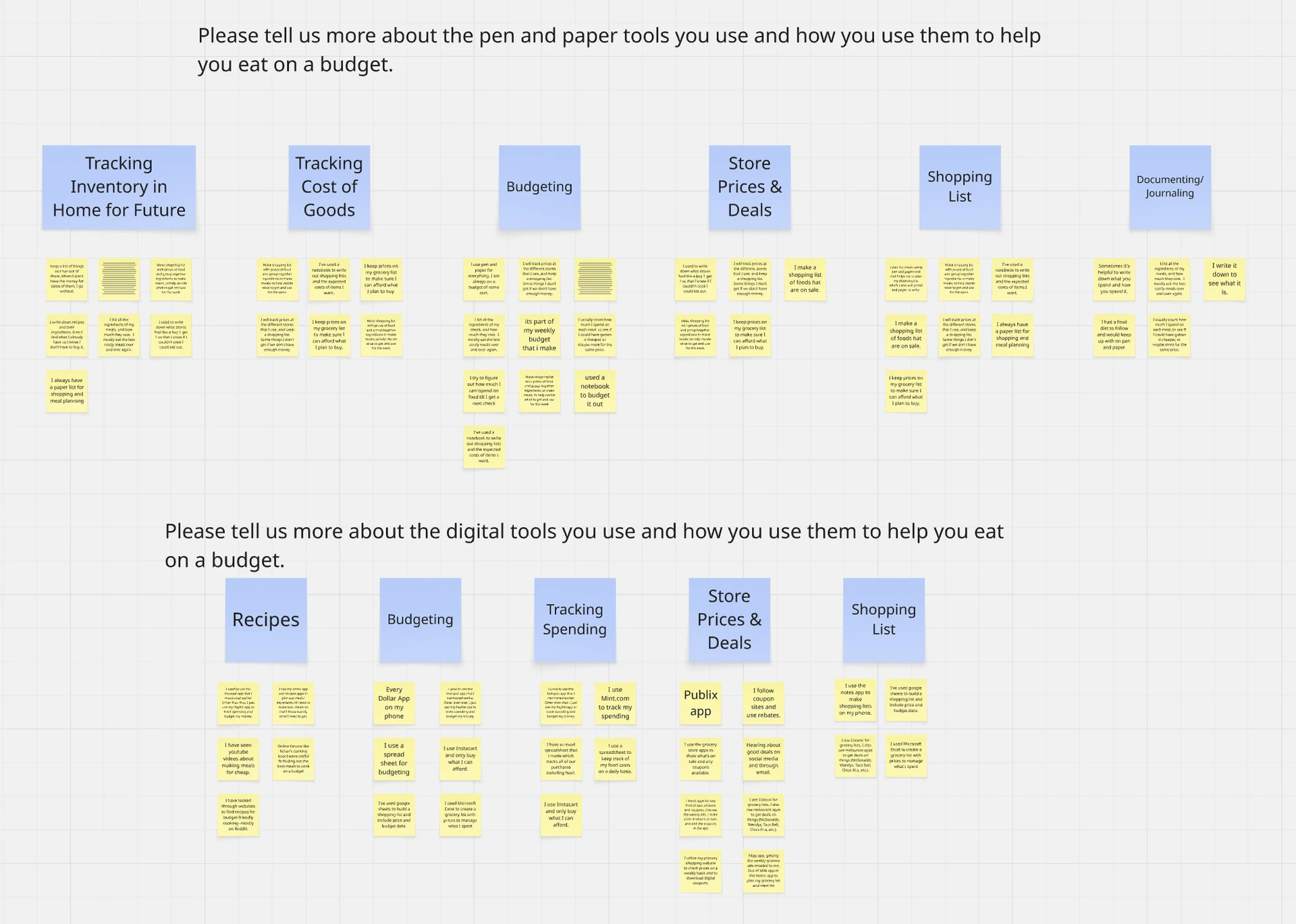
Open-ended answers in Miro
Bucketed, then re-read and re-tagged. Paper tracks what you have; phones track deals.
Couldn't afford balanced meals
Often or sometimes, for 75% of respondents.
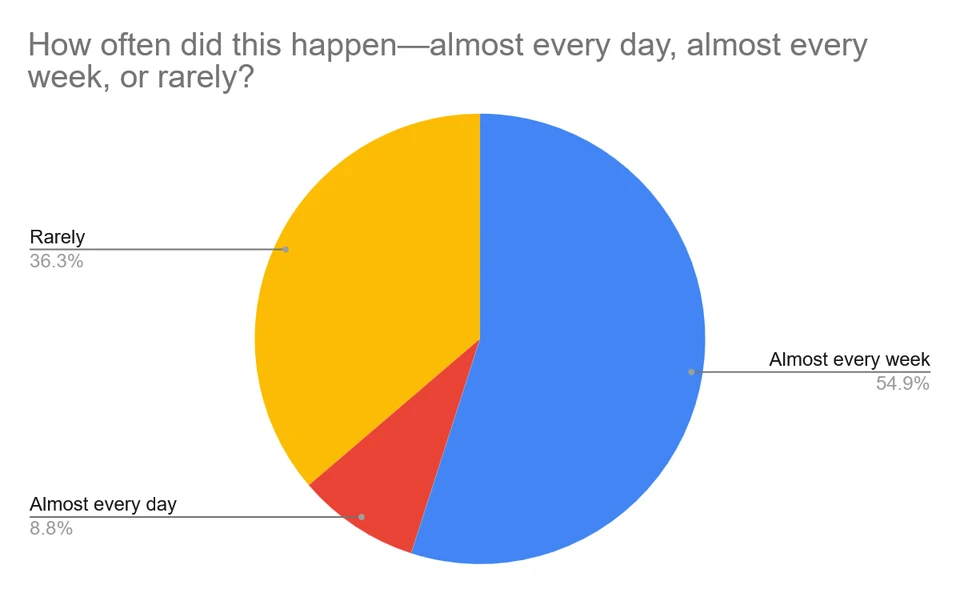
Cut or skipped meals
58%, most of them almost every week.
What the data said
- Price first, health in the middle
- Price scored 4.5 out of 5 and health 3.1. Social media and ads came last.
- Lists, deals, and coupons
- The top strategies were lowest-price stores, store brands, and shopping lists.
- Logging is why people quit
- Health apps lose users when tracking takes too much work (Krebs & Duncan, 2015).
- Everyone has a phone
- All 159 respondents could easily reach a smartphone.
How the research shaped it
Calorie tracking came up a lot, but Fitia already logs meals from a photo
Didn't build another tracker.
A pantry tracker breaks the first time someone cooks without logging it
Started from the shopping list people already keep.
Typing in every item is the work that makes people quit
Add by text, voice, or photo, and let the app parse it.
Healthier food usually costs more
Swaps only show inside a price range you set.
A low score on every item can feel discouraging
Left per-item scores out. Only the better option shows.
What's next
Early feedback came from classmates. Next is usability testing with people shopping on a budget, plus two questions to settle before launch: where the health scores come from, and how stores respond to an app that compares them.
Results
- 159
- survey responses analyzed, numbers and open text
- 1 app
- instead of a store app, a coupon app, and Yuka
- $0 more
- for the first swap I found: Jif at 24/100 to Jif Natural at 60/100
Numbers can be as rich as interviews. Working with this survey data made me want to bring quantitative methods into more of my professional research.